What is a disposable email address?
A disposable email address is a temporary inbox that anyone can create in seconds, with no sign-up. It usually works for a few minutes or hours, then disappears.
People use them for understandable reasons. They want a discount code or a download, and they don't want marketing email. But for the business on the other side, that sign-up isn't a real contact you can ever reach again.
How disposable emails affect your business
One or two won't hurt you. The damage comes when they build up over time, and most businesses don't notice until something else goes wrong.
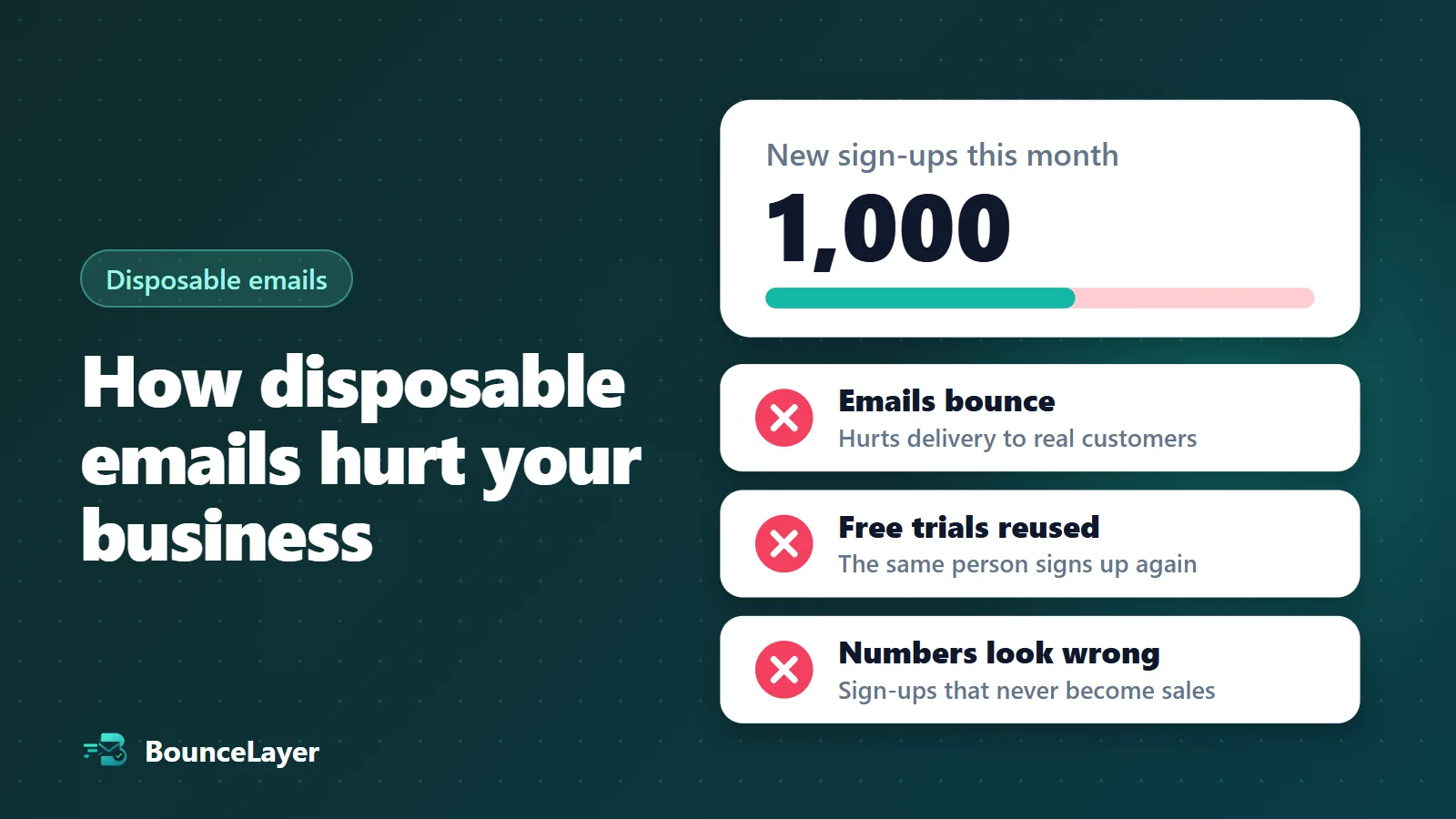
Mail providers judge you on how people respond to your email and how often it bounces. A list full of dead addresses can affect the emails you send to people who really want them.
| Where it hurts | What you'll notice |
|---|---|
| Your numbers | Sign-ups look healthy, but activation and sales don't follow. |
| Your budget | You pay for ads, contacts and free-tier costs for people you can never reach. |
| Your free trial | The same person keeps signing up to get another free trial. |
| Your email delivery | Emails to dead addresses bounce, and that can push real customers' emails toward spam. |
| Your promotions | One-time discounts get claimed many times by the same person. |
Wondering about a domain on your list? Check it with our free disposable email checker.
Check a domainWhy it's easy to miss
Disposable addresses don't look wrong. Many are made to look like normal email addresses at normal-looking domains, and new ones appear all the time. You won't reliably spot them by reading a list, and a short list of blocked domains goes out of date quickly.
That's why it helps to use a verification service that keeps up with them for you. We don't publish exactly how we spot them, because that would only help people get around the check.
What to do about them
You can solve most of this with a few simple habits.
- Check addresses at sign-up, so throwaway emails never reach your list.
- Clean your existing list, because you've probably collected some already.
- Ask new subscribers to confirm their email, which proves they can receive it.
- Write a helpful error message. Try "Please use an email address you check regularly" instead of "Invalid email".
- Don't block free providers like Gmail or Outlook. Plenty of real customers use them.
Should you block every disposable email?
For most businesses, yes, especially if you offer a free trial, a discount or anything you rely on email to deliver. The person can still sign up with an address they really use.
If you only offer a free download and never plan to email people again, it matters less. Even then, keeping these addresses out gives you more honest numbers.